"Inebriabuntur ab ubertate domus tuae, et torrente voluptatis tuae potabis eos; quoniam apud te est fons vitae, et in lumine tuo videbimus lumen." (Ps. 35,9-10)

szerda, április 18, 2007


Inventionis dexteræ Sancti Stephani Regis et Confessoris (die 30 maii)
(Commemoratio: Szent Félix pápa)
Introitus

Tenuísti manum déxteram meam, et in voluntáte tua deduxísti me, et cum glória suscepísti me. (T. P. alleluja, alleluja)
Ps. Beátus, qui intélligit super egénum et páuperem, in die mala liberábit eum Dóminus. Glória Pátri. Euouae.

Collecta

Deus, qui es sanctórum tuórum splendor mirábilis, quique hodiérna die beáti Stéphani, Regis et Confessóris tui, gloriósam déxteram revelásti: da nobis fámulis tuis de ejus semper protectióne gaudére. Per Dóminum nostrum...


Lectio
Libri Tobíæ (4,6-12)

Ómnibus diébus vitæ tuæ Deum in mente habéto Deum, et cave ne aliquándo peccáto conséntias, et prætermíttas præcépta Dómini Dei nostri. Ex substántia tua fac eleemósynam, et noli avértere fáciem tuam ab ullo páupere; ita enim fiet, ut nec a te avertátur fácies Dómini. Quómodo potúeris, ita esto miséricors. Si multum tibi fúerit, abundánter tríbue; si exíguum tibi fúerit, étiam exíguum libénter inpertíri stude. Prǽmium enim bonum tibi thesaurízas in die necessitátis, quóniam eleemósyna ab omni peccáto et a morte líberat, et non patiétur ánimam ire in ténebras. Fidúcia magna erit coram summo Deo eleemósyna ómnibus facientibus eam.


Graduale


Frange esuriénti panem tuum et egénos, vagósque induc in domum tuam.
Dum víderis núdum, óperi eum, et carnem tuam ne despéxeris.

Alleluja

Allelúja. Tunc erúmpet quasi mane lumen tuum, et glória Dómini cólliget te. Allelúja.

(T. P. Allelúja, Allelúja. Beátus, qui intélligit super egénum et páuperem, in die mala liberábit eum Dóminus. Tota die miserétur, et cómodat, semen illíus in benedictióne erit. Allelúja.)

Sequentia sancti
Evangelii secundum Lucam (12,32-34)

In illo témpore: dixit Jesus discípulis suis: Nolíte timére, pusíllus grex, quia complácuit Pátri vestro dare vobis regnum. Véndite quæ possidétis, et dáte eleemósynam. Fácite vobis sácculos, qui non veteráscunt, thesáurum non deficiéntem in cælis: quo fur non apprópriat, neque tínea corrúmpit. Ubi enim thesáurus vester est, ibi et cor vestrum erit.


Offertorium

Dispérsit, dedit paupéribus, justítia ajus manet in sæculum sǽculi: cornu ejus exaltábitur in glória. Allelúja.

Secreta

Múnera tibi, Dómine, nostræ devotiónis offérimus, quæ et pro sancti Stéphani, regis et Confessóris tui tibi grata sint honóra, et nobis salutária te miseránte reddántur. Per Dóminum nostrum...

Communio

Qui adminístrat semen seminánti, et panem manducándum præstábit, et augébit increménta frugum justítiæ ejus, Allelúja.

Postcommunio

Súmpsimus, Dómine, cæléstia sacraménta, beátis Stéphani Regis et Confessóris tui sollémnia celebrántres: præsta, quǽsumus, ut ipso intercedénte, quod temporáliter géssimus, ætérnis gáudiis consequámur. Per Dóminum nostrum...


csütörtök, január 25, 2007

Dominica Quarta post Epiphaniam

SERMO 63 S. Aurelii Augustini

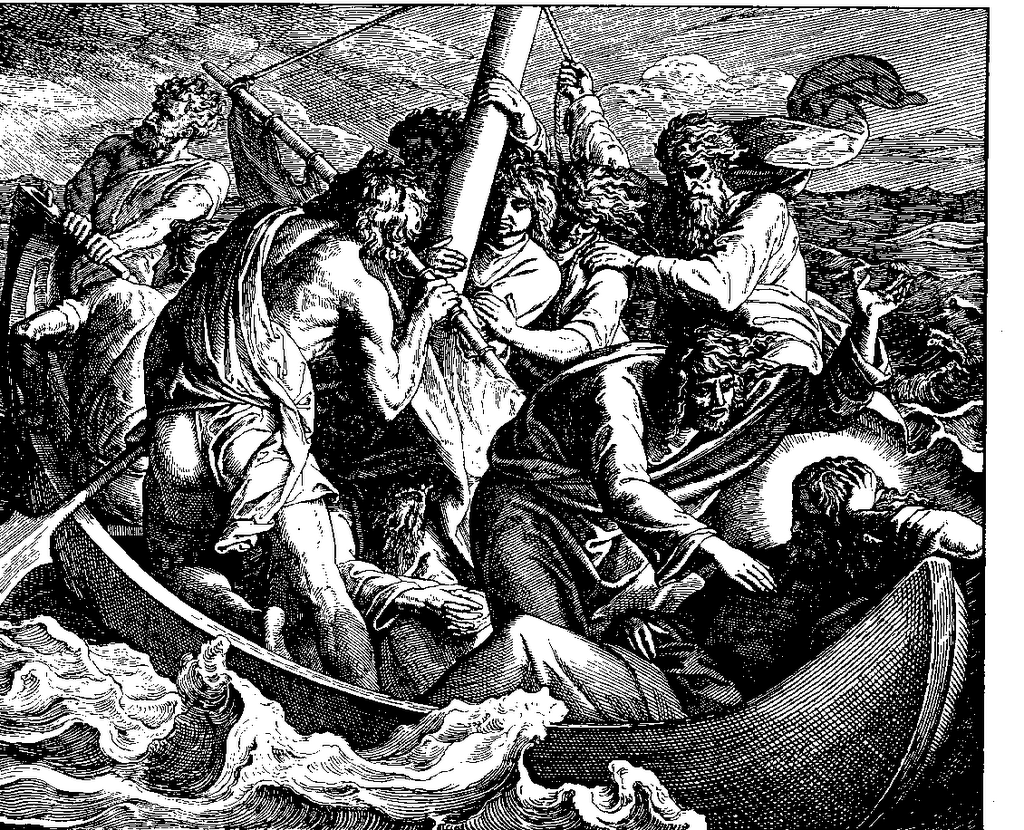
DE VERBIS EVANGELII MT 8, 23-27:
"
ET ASCENDENTE EO IN NAVICULAM", ET CETERA

Somnus Christi signum est sacramenti.

1. De lectione recentissima sancti Evangelii, donante Domino, alloquor vos, et in illo exhortor, ut contra tempestates et fluctus saeculi huius non dormiat fides in cordibus vestris. Non enim revera Dominus Christus mortem habuit in potestate, somnum non habuit in potestate; et forte Omnipotentem navigantem somnus pressit invitum. Hoc si credideritis, dormit in vobis: si autem in vobis vigilat Christus, vigilat fides vestra. Apostolus dicit: Habitare Christum per fidem in cordibus vestris. Ergo et somnus Christi signum est sacramenti. Navigantes sunt animae in ligno saeculum transeuntes. Etiam navis illa Ecclesiam figurabat. Et singuli quippe templa sunt Dei, et unusquisque in corde suo navigat: nec facit naufragium, si bona cogitat.

Vindicta conturbat cor tuum: ignosce, tranquillitas erit.

2. Audisti convicium, ventus est: iratus es, fluctus est. Vento igitur flante, fluctu surgente, periclitatur navis, periclitatur cor tuum, fluctuat cor tuum. Audito convicio vindicari desideras: et ecce vindicatus es, et malo alieno gaudens, fecisti naufragium. Et quare hoc? Quia dormit in te Christus. Quid est, dormit in te Christus? Oblitus es Christum. Excita ergo Christum, recordare Christum, evigilet in te Christus: considera illum. Quid volebas? Vindicari. Excidit tibi, quia ipse cum crucifigeretur dixit: Pater, ignosce illis, quia nesciunt quid faciunt? Qui dormiebat in corde tuo, noluit vindicari. Excita illum, recole illum. Memoria ipsius, verbum ipsius: memoria ipsius, iussio ipsius. Et dices apud te, si vigilat in te Christus: Qualis ego homo, qui volo vindicari? Qui sum ego, qui in hominem exsero comminationes? Morior forte antequam vindicer. Et cum anhelans, ira inflammatus, et sitiens vindictam, exiero de corpore, non me suscipit ille qui noluit vindicari: non me suscipit ille qui dixit: Date, et dabitur vobis; dimittite, et dimittetur vobis. Ergo compescam me ab iracundia mea, et redibo ad quietem cordis mei. Imperavit Christus mari, facta est tranquillitas.

Christum excitemus ut in tranquillo navigamus.

3. Quod autem dixi ad iracundiam, hoc tenete regulariter in omnibus tentationibus vestris. Nata est tentatio, ventus est: turbatus es, fluctus est. Excita Christum, loquatur tecum. Quis est hic, quando et venti et mare obediunt ei? Quis est hic, cui obaudit mare? Ipsius est mare, et ipse fecit illud. Omnia per ipsum facta sunt. Magis imitare ventos et mare: obtempera Creatori. Sub iussione Christi mare audit, et tu surdus es? Mare audit, et ventus cessat, et tu sufflas? Quid? Dico, facio, fingo: quid est aliud nisi sufflare, et sub verbo Christi nolle cessare? Non vos vincat fluctus in perturbatione cordis vestri. Sed tamen quia homines sumus, si ventus impulerit, si affectum animae nostrae moverit, non desperemus: Christum excitemus, ut in tranquillo navigemus, et ad patriam veniamus. Conversi ad Dominum, etc.

szombat, december 16, 2006

"Tridentine Manifesto" for the liberalisation of the Classical Roman Rite (16 December 2006)

LATIN TEXT:

Homines doctos atque eruditos cunctos et universos hortari velim, ut faveant Benedicto XVI Summo Pontifici, quippe Qui lautum copiosumque cultus et humani et divini patrimonium tuendum praedicandum esse censuerit. Digna est enim Eius sententia ut prodatur memoriae, quamvis greges eorum, qui rationis lucem reformidant atque aliorum de re divina repudiant opiniones, in Pontificem acerbissime invehantur. Nuper Arturus Medina S.R.E. Cardinalis, e delectis viris Ecclesiae Dei tuendae, qui disputarunt num sacri ritus Latina lingua impune fieri possent, omnium admiratione: “Mox Summus Pontifex – nuntiavit – motu proprio concedet ut Missa Latina, iuxta Sancti Pii V missale, iterum celebretur”. Quod quidem haud leve habebit momentum non modo Ecclesiae sed civitati quoque et cultui constabiliendis. Etenimvero intellegentes laici omnium primi senserunt quid detrimenti etiam cultus humanus esset accepturus, si aboleretur liturgia Piana atque ipsa Ecclesiae lingua sacra exolesceret.

Quum vero, abhinc XL annis, contra Concilii decreta, ne vetus Ecclesiae liturgia, qua quidem Patres in Concilio ritus celebrarunt, amplius fieri liceret sancitum est, maxima doctorum pars merito hoc sunt criminati, quod Civitatis Christiane velut radix excideretur: fuisse enim liturgiam fontem et originem operum politissima arte factorum. Itaque binae litterae pro Missa Piana sunt in publicum editae, priores anno post Christum natum MCMLXVI, alterae anno MCMLXXI, quas litteras inter alios subsignarunt Georgius Aloisius Borges, Georgius de Chirico, Helena Croce, W. H. Auden, Bressonius et Dreyerus scenarum artifices, Augustus del Noce, Iulianus Green, Iacobus Maritain (vir apprime doctus et a Paulo VI quam maxime dilectus, cui Pontifex decretum eruditis destinatum tradiderat); tum Eugenius Montale, Christina Campo, Franciscus Mauriac, Salvator Quasimodo, Evelyna Waugh, Maria Zambrano, Elemirus Zolla, Gabriel Marcel, Salvator de Madariaga, Ioannes Franciscus Contini, Iacobus Devoto, Ioannes Macchia, Maximus Pallottino, Hector Paratore, Georgius Bassani, Marius Luzi, Vido Piovene, Andrea Segovia, Haroldus Acton, Agatha Christie, Graham Green, aliique quam plurimi, quibus annumerandus Vilelmus Rees-Mogg, moderator ille ephemeridis Britannicae, cui titulus “Tempus”.

Quorum plerique saeculares fuerunt, quoniam omnibus hereditate contigit prisca liturgia Latina, quae est eius praestantia in re civili et divina, haud secus ac Sacellum Xystinum, Cantus Gregoriani, aedes cathedrales, Gothorum statuaria, Basilica Petriana; quin etiam huius liturgiae patrimonium eo diligentius est hisce temporibus tuendum, quo magis Europaeorum Civitas radices velut suas excidere ac deserere periclitatur.

Singulariter autem accidit ut ipsi Catholici novatores, qui dialogi momentum cum mundo saeculari et nostrae aetatis hominibus, quasi vexillum, proposuerant, nihil curarent opiniones eruditorum et XL annis linguae Latinae servarent interdictum: o arbitrium non prius auditum! Mense autem Aprili anni MMV, paulo ante quam Benedictus XVI ad pontificatum eligeretur, Vido Ceronetti, scriptor idemque laicus, epistulam ad novum pontificem edidit, qua rogat ut “detrahatur triste capistrum, qua vox Latina in ritu suffocatur”. Ceterum Iosephus Ratzinger, cardinalis quum esset, apertis verbis fatens Missam Pianam contra omnia vetustatis exempla vetitam esse: “Numquam – inquit – Ecclesia post hominum memoriam ritus orthodoxos abolevit aut vetuit: hoc enim ab ipsa Ecclesiae indole alienum fuisset!”. Idem libro quodam concitate narravit quid de missali a Paulo VI modo publicato sentiret: “Quod Missalis Piani usus vetabatur – ait – percussit me et perturbavit, quandoquidem quippiam simile nullo vetustatis exemplo in liturgiae vicibus confirmabatur; contra autem callide effecerunt ut prohibitio tanquam mos usque adhuc retentus haberetur. Praeterea, vetantes missalis usum, quod inde a priscis Ecclesiae sacramentalibus saeculorum decursu coaluerat, liturgiae gradus et aetates velut interciserunt, ex quo nihil erat oriturum nisi calamitas… aedibus antiquis dirutis, novae sunt exstructae!”.

Quid inde consecutum est nisi damnum magnum? Etenim in re liturgica inita est via licentiae atque intemperantiae. Iosephus Ratzinger cardinalis: “Mihi – ait – persusum est Ecclesiae discrimen, in quo versamur, plerumque ex liturgiae dissolutione proficisci, quae interdum putatur, etsi Deus non daretur, quasi nihil referret utrum Deus sit, audiat nos, nobiscum colloquatur, necne. At si in ritibus iam non apparent fidei communio, universalis unitas Ecclesiae eiusque historiae, mysterium Christi viventis, ubinam Ecclesia iterum appareat cum sua natura spiritali?”.

Nunc vero Deo volente accidit ut cardinalis ille Ratzinger, pontifex creatus, interdictum de prisca liturgia sit aboliturus, cultus libertatem instauraturus, Ecclesiae atque hominum societati redditurus uberrimum copiosumque thesaurum. Itaque Iosephus Ratzinger certis argumentis probatur inter sapientissimos quosque horum temporum merito referri; iis autem qui illiberaliter acerbeque in Eum intra ipsa Ecclesiae moenia invehentur, quemadomodum iam praenuntiarunt Galliae episcopi, oportet ut refragetur turba cultior, quae abhinc XL annis opinionem suam de re aperuit. Quae quum ita sint, rogo homines laicos eruditosque ut coram populo assentiantur. En igitur habeatis tabulam, quam suadeo ut subsignetis:

Nos apertis verbis assentimur Benedicto XVI, quod interdictum de prisca missa, iuxta Sancti Pii missale celebranda, quae missa quasi copiosum cultus humani patrimonium tuenda est et consideranda, abolere statuerit.

Guido Ceronetti, René Girard, Antonio Socci, Vittorio Strada, Franco Zeffirelli

-------------------------------------------------------------

ENGLISH TRANSLATION:

The announcement was given by Cardinal Arturo Medina Estevez, a member of the Ecclesia Dei commission which met to discuss the liberalization of the Latin Mass. The prelate said, "The publication of the Motu Proprio by the Pope which will liberalize the celebration of the Latin Mass according to the Missal of Saint Pius V is close." It is an extraordinarily important event for the Church and even for the culture and history of our civilization. Historically, lay intellectuals were actually those to realize more and better the disaster, the actual cultural destruction, represented by the "prohibition" of the liturgy of Saint Pius V and the disappearance of Latin as sacred language of the Catholic Church.

When, 40 years ago -- in contravention to the documents of the Council -- the prohibition of the ancient liturgy of the Church (that which had been celebrated even during the Council) was imposed, there was a great and meritorious protest by very important intellectuals who considered this decision as an attack on the roots of our Christian Civilization (the liturgy has always been a center and a fountain of the most sublime art). Two appeals were published in defense of the Mass of Saint Pius V, in 1966 and 1971. These are some of the names which undersigned them: Jorge Luís Borges, Giorgio De Chirico, Elena Croce, W. H. Auden, the directors Bresson and Dreyer, Augusto Del Noce, Julien Green, Jacques Maritain (who indeed was the favorite intellectual of Paul VI, the one to whom the Pope had given the letter to intellectuals at the end of the Council), Eugenio Montale, Cristina Campo, François Mauriac, Salvatore Quasimodo, Evelyn Waugh, Maria Zambrano, Elémire Zolla, Gabriel Marcel, Salvador De Madariaga, Gianfranco Contini, Giacomo Devoto, Giovanni Macchia, Massimo Pallottino, Ettore Paratore, Giorgio Bassani, Mario Luzi, Guido Piovene, Andrés Segovia, Harold Acton, Agatha Christie, Graham Greene, and many others, incuding the editor of the “Times”, William Rees-Mogg.

They are largely lay intellectuals because the cultural and spiritual value of the ancient Latin liturgy is a legacy of all, as is the Sistine Chapel, as is the Gregorian [chant], as the great cathedrals, Gothic sculpture, the Basilica of Saint Peter also are. Even more so today, when our entire European Civilization risks to cut off and deny its own roots.

Curiously, even "progressive Catholics", who made the dialogue with the world and with modern culture their banner, did not give any regard and fought for forty years to keep this incredible prohibition. An unprecedented arbitrariness. In April 2005, at the eve of the election of Benedict XVI, it was a lay writer, Guido Ceronetti, who writes, in La Repubblica, an open letter to the new Pope, in which he asked "that the sinister suffocating gag on the Latin voice of the Mass be removed". When he was a cardinal, Ratzinger declared that the prohibition of the Mass of Saint Pius V was unprecedented: "throughout her history, has never abolished nor forbidden orthodox liturgical forms, which would be quite alien to the very spirit of the Church". In one of his books, he retold dramatically how he had viewed the publication of the missal of Paul VI: "I was dismayed by the prohibition of the old missal, since nothing of the sort had ever happened in the entire history of the liturgy. The impression was even given that what was happening was quite normal," but, Ratzinger wrote, "the prohibition of the missal that was now decreed, a missal that had known continuous growth over the centuries, starting with the sacramentaries of the ancient Church, introduced a breach into the history of the liturgy whose consequences could only be tragic ... the old building was demolished, and another was built."

The effects were disastrous. The road to incredible abuses in the liturgy was opened. Ratzinger writes, "I am convinced that the crisis in the Church that we are experiencing today is to a large extent due to the disintegration of the liturgy, which at times has even come to be conceived of etsi Deus non daretur: in that it is a matter of indifference whether or not God exists and whether or not He speaks to us and hears us. But when the community of faith, the world-wide unity of the Church and her history, and the mystery of the living Christ are no longer visible in the liturgy, where else, then, is the Church to become visible in her spiritual essence?"

That same Ratzinger, now Pope Benedict XVI, who prepares to cancel the prohibition, will find opposition even inside the Church (already pre-announced by the French bishops) and he deserves an answer from the world of culture which, forty years ago, made its voice heard. I ask intellectuals and whomever may wish to do so to sign this synthetc manifesto:

We express our praise for the decision of Benedict XVI to cancel the prohibition of the ancient Mass in Latin according to the Missal of Saint Pius V, a great legacy of our culture, which must be saved and rediscovered.

vasárnap, november 26, 2006

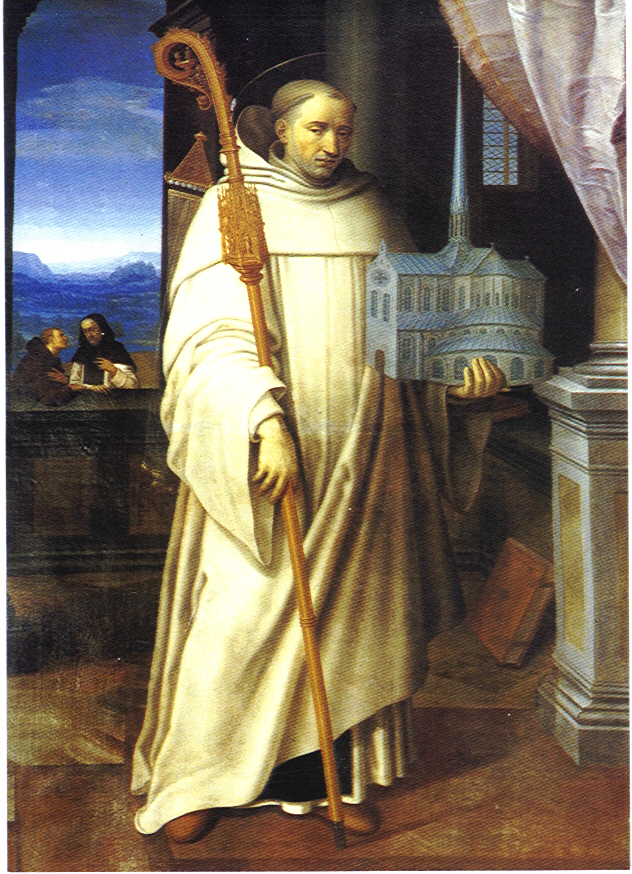
Álljon most itt az egyik legkedvesebb idézetem Szent Bernát egyháztanítótól:

Tantum lucere vanum, tantum ardere parum: ardere et lucere perfectum.

magyarul (szó szerint):

Csak ragyogni hiúság, csak lobogni kevés, lobogni és ragyogni tökéletes.

magyarul (magyarázó fordításban):

Csak okoskodni és feltűnően cselekedni kérkedő hiúság, csak buzgólkodni és lelkesedni elégtelen, törekedni és nagyvonalúan cselekedni tökéletes.

magyarul (közönségesen):

Csak brillírozni és kivagyi módon fényezni magad nagyképűség, csak loholni és erőlködni nagyon kevés, a tökéletességhez egyszerre kell iparkodni és virítani .

A forrás:

Clairvaux-i Szt. Bernát szentbeszéde Keresztelő Szt. János születésének ünnepén (június 24).

"Audite ergo, fratres, quid de Joanne loquatur, cujus solemnis hodie nativitas celebratur. Ille, inquit, erat lucerna ardens, et lucens (Joan. V, 35). 0399B Magnum testimonium, fratres mei: magnus enim est cui perhibetur, sed major est ipse qui perhibet. Ille, inquit, erat lucerna ardens, et lucens. Est enim tantum lucere vanum, tantum ardere parum: ardere et lucere perfectum." (Sermo in nativitate S. Ioannis Baptistae, PL 183:399)

szombat, november 25, 2006

THE VIRGIN BIRTH OF CHRIST: A TRUTH BEYOND THE GRASP OF REASON, A WONDER WITHOUT EXAMPLE

(Denzinger-Hünermann 533; Council of Toledo XI, 7 November 675), a new creation at the beginning of the new creation.

I have never been a great supporter of movies about the life of our Lord, mostly because they are made with very little regard to historical accuracy and dogmatic truthfulness. A new such enterprise is "The Nativity Story" due in the theatres from the 1st of December this year. Curiosity got the better of me, and I decided to watch the trailer. It was more than enough for me to be scandalised as a Catholic who believes in the perpetual virginity of our Lady before, during, and after childbirth (ante partum, in partu, post partum). This is a de fide definita dogmatic truth of the Catholic faith, which may not be questioned without temerity or rejected without falling into formal heresy.

This film, as also others, such as Zeffirelli's (unduly) celebrated "Jesus of Nazareth," portrays the sacred moment of Christ's birth by showing Our Lady covered with drops of sweat, screaming in pain as she delivers the Christ-child. This is a terrible insult not only to the Holy Virgin but also the blessed Fruit of her virginal womb; an insult grievous enough for any Catholic to recoil in horror and refuse to pay a single penny to see this ordeal.

We live in difficult times, and so one may not suppose without a gross amount of naiveté that such truths of the Catholic faith as the perpetual virginity of our Lady are perfectly clear in the minds of even churchgoing, committed Catholics. Hence I now endeavour to give a short explanation of the doctrine at hand, risking a bit of sketchiness in the result.

The gist of it is that our Lady was ever-Virgin, before, DURING, and after giving birth to Christ. The Lateran Council of 649 gave the following summary: "If anyone does not, according to the Holy Fathers, confess truly and properly that the holy and ever virgin and immaculate Mary is really and truly the Mother of God, inasmuch as she, in the fullness of time, and without human seed, conceived by the Holy Spirit, God the Word Himself, who before all time was born of God the Father, and without loss of integrity brought Him forth, and after His birth preserved her virginity inviolate, let him be condemned." (DH 503)

For further reference I include here a good number of Magisterial evidence. This is not for the faint-hearted, so you may skip this summary without losing comprehension.

ante partum, DH (91)185; (113)252;, novo ordine ... nova autem nativitate [(282)533]; (201)401, semper virgo; (202)401, veraciter autem ideo, ne in phantasmate aut aliquo modo non veram sumsisse carnem credatur ex virgine [(344)681]; (214)422, semper virgo, Dei Verbi duas esse nativitates, unam quidem ante saecula ex patre sine tempore incorporaliter, alteram vero in ultimis diebus; (255)502, semper virgo

in partu, “Conceptus quippe est de Spiritu Sancto intra uterum virginis matris, quae illum ita salva virginitate edidit, quemadmodum salva virginitate concepit...” Leo the Great “Quam laudabiliter”, 21 July 447; DH 291. (144)294 “nativitas est mirabilis”; Pope Hormisdas, Ep. “Inter ea quae”, DH 368; DH (993)1880

post partum DH (734)1400

Inseparable from the concept of Mary's ever inviolate virginity and the entirely miraculous nature of
Christ's nativity is the fact that she did not experience the pangs of child-birth. Being the immaculate, all-holy daughter of God, she was exempt from this punishment of the first Eve. The painlessness of Christ's birth is first emphasised by Gregory of Nyssa: “Her pregnancy was without coition, her childbed undefiled, her travail free from pain... his birth alone was without labour, just as His formation was without union.” (In Cantica canticorum, serm. 13; PG 44:1053; also In Christi resurrectionem, orat. 1; PG 46:604) It is also emphasised by St. Ephraem (Explanatio Evangelii concordantis 2, 6), and Damascene: “for as pleasure did not precede it, pain did not follow it.” (De fide orthodoxa, lib. 4, cap. 14)

Needless to say that this venerable doctrine was upheld universally, both in the Christian East and West, until the Reformation. Then slowly but surely its denial reared its ugly head even among so-called Catholic thinkers. Albert Mitterer argued that according to modern natural scientific knowledge, the purely physical side of virginity consists in the non-fulfilment of the sex act (sex-act virginity) and in the non-contact of the female egg by the male seed (seed-act virginity). Thus, the two traits given in tradition (absence of pains of childbirth and preservation of the hymen) do not belong to the essence of virginity and their lack implies a diminution of motherhood. Cf. Albert Mitterer, “Dogma und Biologie der heiligen Familie,” Vienna, 1952, pp. 98-130 and “Marias wahre Jungfraülichkeit und Mutterschaft in der Geburt” in Theologische-praktische Quartalschrift 108 (1960), pp. 188-93. Mitterer was followed by C. E. L. Henry, “A Doctor Considers the Birth of Jesus,” in Homiletic & Pastoral Review 54 (1953, pp. 219-233).

The same view seems to be advanced even by the “Venerable” Ludwig Ott, Fundamentals of Catholic Dogma, p. 205; and Jean Galot, S.J. openly argued for Mary’s painful delivery and the rupture of her hymen. Cf. Maria, la donna nell’opera di salvezza (Roma : Universit? Gregoriana Editrice, 1984), p. 159. As I have already pointed out, this theory has no precedence in Catholic tradition, except for Jerome’s hesitation about Our Lady’s in partu virginity (De virginitate perpetua; PL 23:202), for which he was duly criticised even in his lifetime. It must be remembered that Jerome’s contemporaries (e.g. Augustine) were unconditionally in favour of the doctrine, and Jerome himself seemed to waver, as may be seen from Homilia in Joannem 1,1-14 (CCL 78:521), where he likened the virgin birth to the resurrected Lord’s passing through locked doors.

This non-physical interpretation of virginity at the moment of birth, however, can hardly be reconciled with the language of the Fathers. The Greek word aphthoros (Gregory of Nyssa, Orat. Catech. 23; PG 45:61B; Damascene, De fide orthodoxa 1,2; PG 94:792D), means untouched, unharmed, or inviolate, and as such, it is clearly suggestive of a physical kind of integrity; a concept the relevant Latin texts denote as incorruptibilitas and integritas.

Karl Rahner considers the physical integrity of the Virgin’s hymen in giving birth to her Son an idea “too mythical for modern believers.” Interestingly, he upholds the painlessness of Christ’s human nativity on the peculiar basis of the Virgin’s special psychological state and integrated experience of physical pain, but in the end it seems nothing more than his strange rendition and re-interpretation of the in partu virginity. (‘Virginitas in partu’ in Theological Investigations vol. 4 (trans. by Kevin Smyth, 1966), pp 134-162; and ‘Human aspects of the birth of Christ’ in Theological Investigations vol. 13 (trans. by David Bourke, 1975), pp. 189-194)

Very possibly, in response to the theories of people like A. Mitterer, the Holy Office in July 1960 drew up a decree but did not publish it officially. It was sent to a certain number of bishops and religious superiors as a monitum (and ignored by the Jesuit Galot and Rahner). Several journals did publish it, however, e.g. in Italian in Ephemerides Mariologicae 11, 1961, p. 138 and Marianum 23, 1961, p. 336, in French in La Vie des Comunautés Religieuses (Montreal) 18, 1960, no. 8. Laurentin, in “A Short Treatise on the Virgin Mary.” (Washington, N.J.: AMI Press, 1991) translated the decree to English on pp. 318-329:

“This supreme Congregation has often observed recently, and with deep concern, that theological works are being published in which the delicate question of Mary’s virginity in partu is treated with a deplorable crudeness of expression and, what is more serious, in flagrant contradiction to the doctrinal tradition of the Church and to the sense of respect the faithful have. Consequently, in its plenary session of Wednesday, the twentieth of this month [July 1960], it seemed necessary to the eminent Fathers of the Holy Office, by reason of their serious responsibility to watch over the sacred deposit of Catholic doctrine, to see to it that for the future the publication of such dissertations on this problem be prohibited.”

John Paul II in a General Audience of Jan 28, 1987 (no. 1) cited this text: “Mary was, therefore, a virgin before the birth of Jesus, and she remained a virgin in giving birth, and after the birth. This is the truth presented by the New Testament texts, and which was expressed both by the Fifth Ecumenical Council at Constantinople in 553, which speaks of Mary as ‘ever virgin’, and also by the Lateran Council in 649, which teaches that ‘the mother of God...Mary...conceived [her Son] through the power of the Holy Spirit without human intervention, and in giving birth to him, her virginity remained uncorrupted, and even after the birth her virginity remained intact’.”

Catechism of the Catholic Church 510: Mary “remained a virgin in conceiving her Son, a virgin in giving birth to him, a virgin in carrying him, a virgin in nursing him at her breast, always a virgin” (St. Augustine, Serm. 186, 1: PL 38, 999): with her whole being she is “the handmaid of the Lord” (Lk 1:38).

One may make a feeble attempt to defend the makers of the film “The Nativity Story” by saying that the majority of them are Protestant. But what kind of an excuse – ask I – is that for blasphemy? It is well for us to be reminded that not even Luther dared to deny Mary’s perpetual virginity: “Christ, we believe, came forth from a womb left perfectly intact” (WA 6:510), and “It is an article of faith that Mary is Mother of the Lord and still a virgin.” (WA 11:319-320)

kedd, november 21, 2006


SOKAKÉRT KIONTATIK (PRO MULTIS EFFUNDETUR)

A napokban került nyilvánosságra Arinze bíborosnak, az istentiszteleti Kongregáció prefektusának ezév október 17-én keltezett levele, melyben értesíti a világ minden katolikus püspöki konferenciáját a Szentszék azon döntéséről, miszerint a miseordó konszekrációs szövegében szereplő pro multis effundetur szavakat minden egyes népnyelvű szövegben a „sokakért kiontatik” formában kell lefordítani és szentségileg alkalmazni.

Ez eredetileg a magyar szövegben így szerepelt, de később „nyugati mintára” ezt megváltoztatták. Pontosan nem emlékszem ez mikor történt, de az bizonyos, hogy ezt már a templompadban éltem át, s arra is emlékszem, hogy teljes értetlenséggel fogadtam ezt a fölfogásom szerint fölösleges és önkényes változtatást. Ezt persze más változtatások is követték, mint pl. a „Miatyánk” és a „Hiszekegy” ú.n. ökumenikus fordítása, amit már egyenesen fölháborodással vettem tudomásul.

Később, teológiai tanulmányaim során ráébredtem, hogy a pro multis (ha úgy tetszik) értelmező fordítása „mindenkiért” formában nem egyszerűen önkényes volt, hanem sajnos doktrinális szempontból meglehetősen pontatlan, ha nem kifejezetten problematikus. Távol álljon tőlem a kérkedő „hát nem megmondtam?” típusú magatartás, de már 1998 szeptemberében megfogalmaztam egy „A Novus Ordo Magyar Fordításának problémái” című írásomban (lásd: www.katolikus-traditio.hu/2-12.htm), hogy a „mindenkiért” forma nem fordítás, hanem ferdítés.

Istennek hála, a Szentszék hosszas bénult hallgatás után elhatározta, hogy végérvényesen rendezi ezt a liturgikus anomáliát. Csak remélni tudom, hogy ez az Istentiszteleti Kongregáció által 2001. március 28-án kiadott Liturgiam authenticam kezdetű instrukció szellemében fogant rendelkezés csak egyike azon intézkedéseknek, melyek szentélyeink megfakult dicsőségét hivatottak helyreállítani, s amelyek idővel a liturgikus szövegek magyar fordításának teljeskörű revízióját fogják eredményezni.

Álljon tehát most itt először a kérdésre vonatkozó megjegyzésem 1998-ból, valamint Arinze bíboros instrukciójának teljes angol nyelvű szövege. Igen tanulságos...

Szent Vér konszekrációjának kifejezése pro vobis et pro multis effundetur, értetek és sokakért kiontatik, nem pedig „értetek és mindenkiért kiontatik”.

Először is: felesleges vitába elegyedni a ma oly divatos (és defektív) teológiai érveléssel a pro universis vagy pro omnibus (mindenkiért) kifejezés mellett, hiszen a normatív latin szöveg a mérvadó, ami egyértelműen pro multis. (Roma locuta, causa finita)

Másodszor: a.) „Pro multis” található a konszekrációban, mert ez egy szentségi formula, az objektív megváltás szakramentális közlése (redemptio subjectiva), és nem csupán egy megemlékező elbeszélés (anamnézis).

b.) Ha mégis megvizsgáljuk az ún. bibliai vagy exegetikai érveket, úgy kitűnik, hogy az állításokkal ellentétben, mind az arám, mind pedig a héber nyelvben létezik külön kifejezés a „sok” és a „mindenki” fogalmaira. Mivel az Utolsó Vacsora zsidó liturgikus keretben (tehát héber nyelven) került megünneplésre, ezért csak a hébert kell tüzetesebben megvizsgálni.

mindenki (pl. Róm 5,12) - lekulám (gör. pas, pasa, pan) sokak (pl. Róm 5,15) - lerebím (gör. polus, pollé, polu)

c.) A mindent eldöntő érv azonban az, hogy a Római Katekizmus zsinati tekintéllyel rendelkező (ex decreto concilii) tanítást ad erről:

„A hozzáadott szavak ’értetek és sokakért’ egyikét (to hyper hymón - Lk 22,20; 1 Kor 11,24) Lukács, másikát (to peri pollón - Mt 26,28) Máté evangéliumából vették, de ezeket a Katolikus Egyház Isten Szent Lelkétől vezettetve összekapcsolta. Ez azt szolgálja, hogy hirdesse az Ő (Krisztus) szenvedésének gyümölcsét és hasznát. Mert ha értékét tekintjük, meg kell vallanunk, hogy a Megváltó mindenki üdvösségéért ontotta Vérét; de ha arra a gyümölcsre tekintünk, amit az emberiség nyert belőle, könnyen belátható, hogy az nem mindenkire, hanem csak sokakra vonatkozik az emberi nemből... Amikor Krisztus azt mondta, hogy ’sokakért’, akkor azt kívánta érteni ez alatt, hogy a zsidók és pogányok közül származó választott maradékért.

Ezért hát okkal nem használta a ’mindenkiért’ kifejezést, mert e helyen egyedül a (megváltó) szenvedés gyümölcseiről van szó, és az Ő szenvedése csak a választottaknak hozta el az üdvösséget. Ez az Apostol (Szent Pál) szavainak értelme, mikor azt mondja: ’Krisztus is egyszer lett áldozattá, hogy sokak bűnét elvegye’ (eis to pollón - Zsid 9,28; Iz 53,12), ugyanígy a mi Urunk szavai János evangéliumában: ’Értük könyörgök. Nem a világért könyörgök, hanem azokért, akiket nekem adtál, mert ők a tieid.’ (Jn 17,9)”

CONGREGATIO DE CULTU DIVINO
ET DISCIPLINA SACRAMENTORUM

Prot. n. 467/05/L

Rome, 17 October 2006

Your Eminence / Your Excellency,

In July 2005 this Congregation for the Divine Worship and the Discipline of the Sacraments, by agreement with the Congregation for theDoctrine of the Faith, wrote to all Presidents of Conferences of Bishops toask their considered opinion regarding the translation into the various vernaculars of the expression pro multis in the formula for the consecration of the Precious Blood during the celebration of Holy Mass (ref. Prot. n. 467/05/L of 9 July 2005).

The replies received from the Bishops’ Conferences were studied by the two Congregations and a report was made to the Holy Father. At his direction, this Congregation now writes to Your Eminence / Your Excellency in the following terms:

1. A text corresponding to the words pro multis, handed down by the Church, constitutes the formula that has been in use in the Roman Rite in Latin from the earliest centuries. In the past 30 years or so, some approved vernacular texts have carried the interpretive translation “for all”, “per tutti”, or equivalents.

2. There is no doubt whatsoever regarding the validity of Masses celebrated with the use of a duly approved formula containing a formula equivalent to “for all”, as the Congregation for the Doctrine of the Faith has already declared (cf. Sacra Congregatio pro Doctrina Fidei, Declaratio de sensu tribuendo adprobationi versionum formularum sacramentalium, 25 Ianuarii 1974, AAS 66 [1974], 661). Indeed, the formula “for all” would undoubtedly correspond to a correct interpretation of the Lord’s intention expressed in the text. It is a dogma of faith that Christ died on the Cross for all men and women (cf. John 11:52; 2 Corinthians 5,14-15; Titus 2,11; 1 John 2,2).

3. There are, however, many arguments in favour of a more precise rendering of the traditional formula pro multis:

a. The Synoptic Gospels (Mt 26,28; Mk 14,24) make specific reference to “many” (Greek word transliterated as polloin) for whom the Lord is offering the Sacrifice, and this wording has been emphasized by some biblical scholars in connection with the words of the prophet Isaiah (53, 11-12). It would have been entirely possible in the Gospel texts to have said “for all” (for example, cf. Luke 12,41); instead, the formula given in the institution narrative is “for many”, and the words have been faithfully translated thus in most modern biblical versions.

b. The Roman Rite in Latin has always said pro multis and never pro omnibus in the consecration of the chalice.

c. The anaphoras of the various Oriental Rites, whether in Greek, Syriac, Armenian, the Slavic languages, etc., contain the verbal equivalent of the Latin pro multis in their respective languages.

d. “For many” is a faithful translation of pro multis, whereas “for all” is rather an explanation of the sort that belongs properly to catechesis.

e. The expression “for many”, while remaining open to the inclusion of each human person, is reflective also of the fact that this salvation is not brought about in some mechanistic way, without one’s willing or participation; rather, the believer is invited to accept in faith the gift that is being offered and to receive the supernatural life that is given to those who participate in this mystery, living it out in their lives as well so as to be numbered among the “many” to whom the text refers.

f. In line with the Instruction Liturgiam authenticam, effort should be made to be more faithful to the Latin texts in the typical editions.

4. The Bishops’ Conferences of those countries where the formula “for all” or its equivalent is currently in use are therefore requested to undertake the necessary catechesis of the faithful on this matter in the next one or two years to prepare them for the introduction of a precise vernacular translation of the formula pro multis (e.g, “for many”, “per molti”, etc.) in the next translation of the Roman Missal that the Bishops and the Holy See will approve for use in their country.

With the expression of my high esteem and respect, I remain, Your Eminence/Your Excellency,

Devotedly Yours in Christ,

Francis Card. Arinze
Prefect